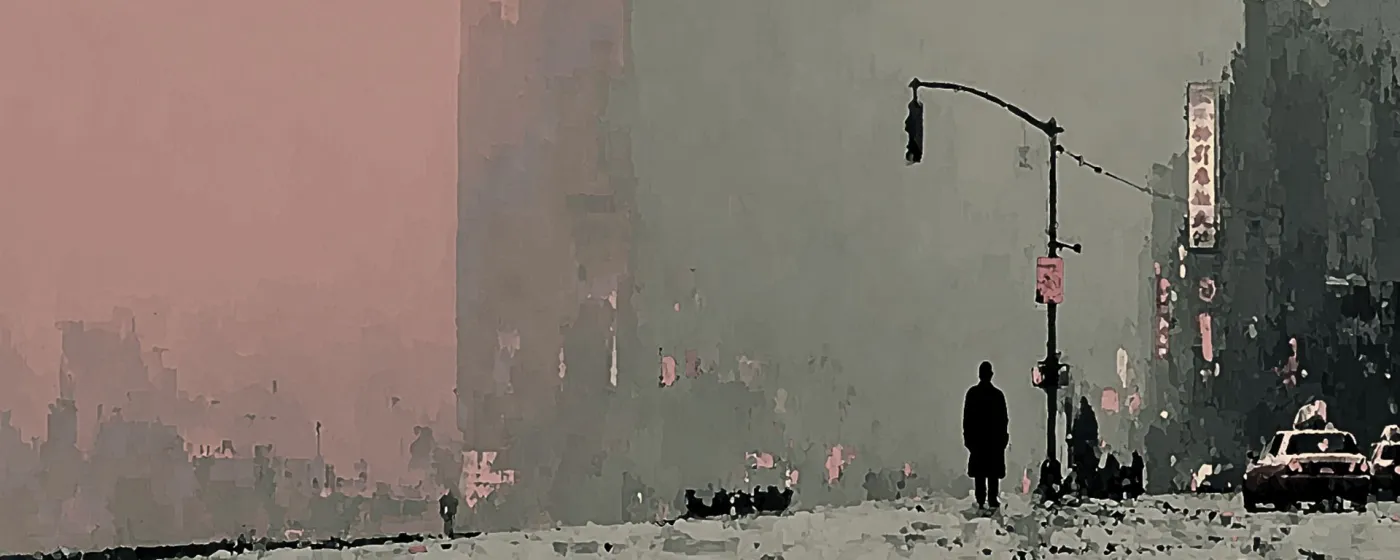
There’s something wild about realizing… Not everyone sees color the same.
Like literally....
Some people don’t see pink
Or green
Or blue
Or any combination of them.
For some, the entire world looks muted, like someone turned the vibrance slider way down. For others, certain colors just don’t register as distinct. They blend into one another, impossible to separate.
First, let’s kill the myth:
☒ Colorblind people don’t see in black and white.
✓ Most actually see color; just not all the colors (or hues) the way most people do.
The scientific term is color vision deficiency.
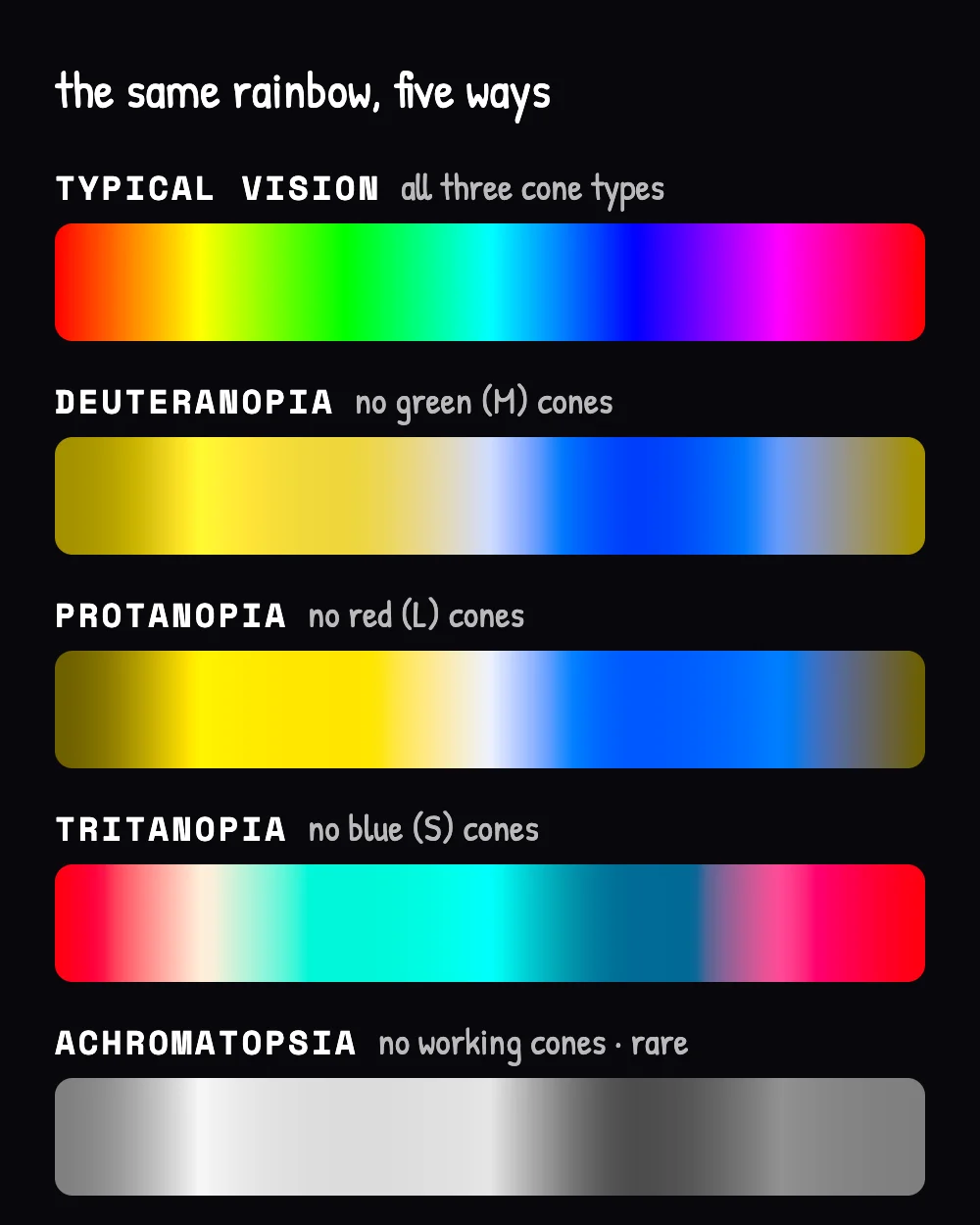
It happens when the cone cells in the retina (your brain's color detectors) are missing, malfunctioning, or miswired. And depending on which cones are affected, people experience different types of color blindness:
▪ Deuteranopia – no green cones
▪ Protanopia – no red cones
▪ Tritanopia – no blue cones
▪ Monochromacy – rare: no functioning cones at all = truly black-and-white vision
An estimated 1 in 12 men and 1 in 200 women are affected.
It comes down to genes.
The genes for your red and green cones sit on the X chromosome. Men have one X, so one changed copy is enough. Women have two, so it has to show up on both. That’s why it’s so much more common in men.
And it’s not always all or nothing. There are milder versions too (deuteranomaly, protanomaly, tritanomaly) where the cones are there, just tuned a little off. Deuteranomaly is actually the most common type of all.
Worldwide, that adds up to roughly 300 million people.
Imagine trying to tell a ripe tomato from an unripe one... but they both look brown. Or picking an outfit, but not realizing your green shirt and red pants clash violently. Or trying to read color-coded charts in school… and they all just look gray.
To add some perspective on what life's like for them:
- To someone with red-green color blindness, traffic lights are more about position than hue.
- To someone with blue-yellow issues, the ocean might look more like a dull, dusty teal.
- Some people might see pink as gray.
Most people don’t even realize they’re colorblind until someone points it out 🥺
In the UK, about 40% of colorblind students leave school without ever knowing they’re colorblind.
Some people describe it as disorienting. Others say it’s funny... like realizing you’ve been calling pink, “gray” your whole life. But there’s also grief. Imagine seeing your first “real” sunset through EnChroma glasses, and realizing:
“This is what everyone’s been seeing all along? This vibrancy is what I've been missing out on”
It’s beautiful… and heartbreaking.
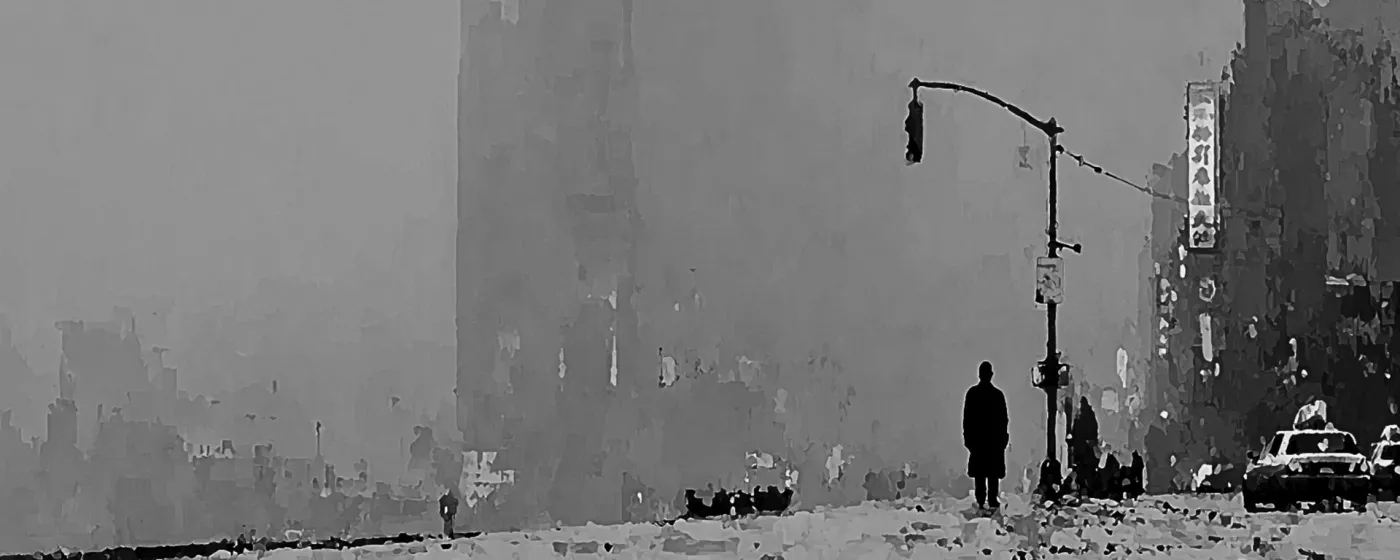
Color isn't just visual, it's emotional. Think about how many of your day-to-day emotions come from seeing the world around you in full color. Like that sunflower that makes you smile, the red light that makes you feel angry every time you get stuck behind it, that blue butterfly.... 🦋
We associate colors with moods, memories, meaning.
🔴 Red = love, danger, passion
🔵 Blue = calm, sadness, trust
🟢 Green = go, envy, nature
But if those shades are dulled (or indistinguishable) how would that change your emotional palette?
PS. If you know someone who's colorblind IRL, the best gift you can probably get them is EnChroma Glasses. Jus sayin..
Me, personally... it teaches me how to appreciate colors more. I've been an artist all my life and have seen colors as a way to express feelings, emotions and myself in general. Imagine art without being able to differentiate color. DANG!
However, color blindness isn’t a flaw. It’s just a different filter on the same world we see everyday.
Here's a subtle reminder:
- We don’t all experience beauty the same way. What you take for granted might be invisible to someone else.
- Empathy isn’t about having the same vision. It’s about honoring different ones.
Whether it’s color, emotion, language, or pain… Not everyone sees the world the way you do.
And that’s completely...